THE IMPORTANT DIFFERENCE
A REGULAR GOLF CART IS NOT THE SAME THING AS AN LSV.
California uses different legal definitions for golf carts and Low Speed Vehicles. That distinction matters when you plan to drive on public streets.
IF STREET LEGAL MATTERS, DECIDE BEFORE YOU BUYBUY THE VEHICLE AS AN LSV FROM THE START.
If you want a street legal vehicle, tell us before the sale. A golf cart sold and documented as a golf cart generally cannot simply be converted into an LSV later by adding lights, mirrors, seat belts, or other equipment. LSV status depends on how the vehicle was manufactured, certified, identified, documented, and registered. Do not assume a golf cart can be retroactively registered as an LSV after purchase.
CALIFORNIA STATUTORY GOLF CARTPRIVATE PROPERTY AND LIMITED ROAD USE.
California DMV defines a golf cart as a vehicle designed for golf equipment, no more than two people, 1,300 pounds or less unladen, and designed not to exceed 15 MPH.
- Not automatically street legal everywhere
- Road use can depend on local ordinances
- Different registration rules can apply
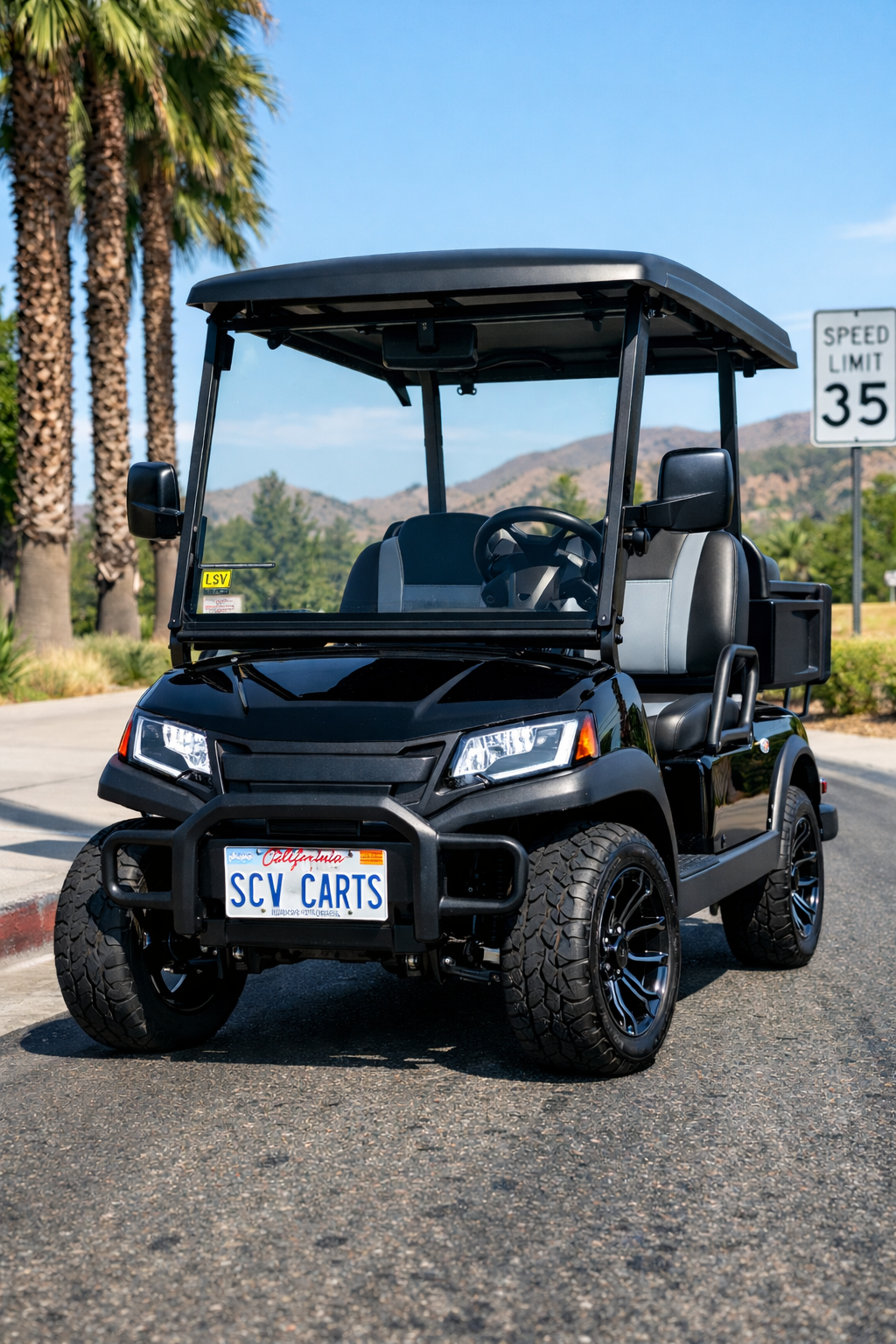
LOW SPEED VEHICLE, LSV / NEVTHE STREET LEGAL ROUTE.
LSVs are motor vehicles built to federal low speed vehicle standards and are treated differently from traditional golf carts.
- Maximum speed of 25 MPH
- California registration and plate
- Insurance and valid driver license required
- Required federal safety equipment
About the common “19 MPH golf cart” number: many neighborhood carts are manufacturer limited around that speed, but California's statutory definition of a “golf cart” is 15 MPH. If public road use matters, the LSV classification, VIN, equipment and registration are what you want to focus on.